Spades Masters - Card Game
- 4.6
- Rating
- 1.00M
- Installs
- Free
- Price

 Analysis by App-foxy
Spades Masters - Card Game is the kind of mobile game I open when I want a familiar card table without arranging a group in the same room. It is an online multiplayer spades game from YallaPlay, available free of charge for Android users, with an Everyone content rating. I found its appeal easy to understand: the rules are recognizable, rounds are compact enough for casual play, and the online format makes it possible to play with friends or other people when my schedule does not line up with theirs.
What makes the experience worth examining more closely is not simply whether the cards work. A card game can be technically straightforward and still be tiring if the table is hard to read, the controls demand too much precision, or the pace leaves no room to think. In my experience, this game is most enjoyable when I treat it as a social, turn-based break rather than as a background activity. Its strongest qualities are clarity, familiarity, and the low cost of trying it. Its weaker side is the friction that comes with online play and optional purchases, especially for people who need a slower, quieter, or more predictable experience.
How the table feels to read and navigate
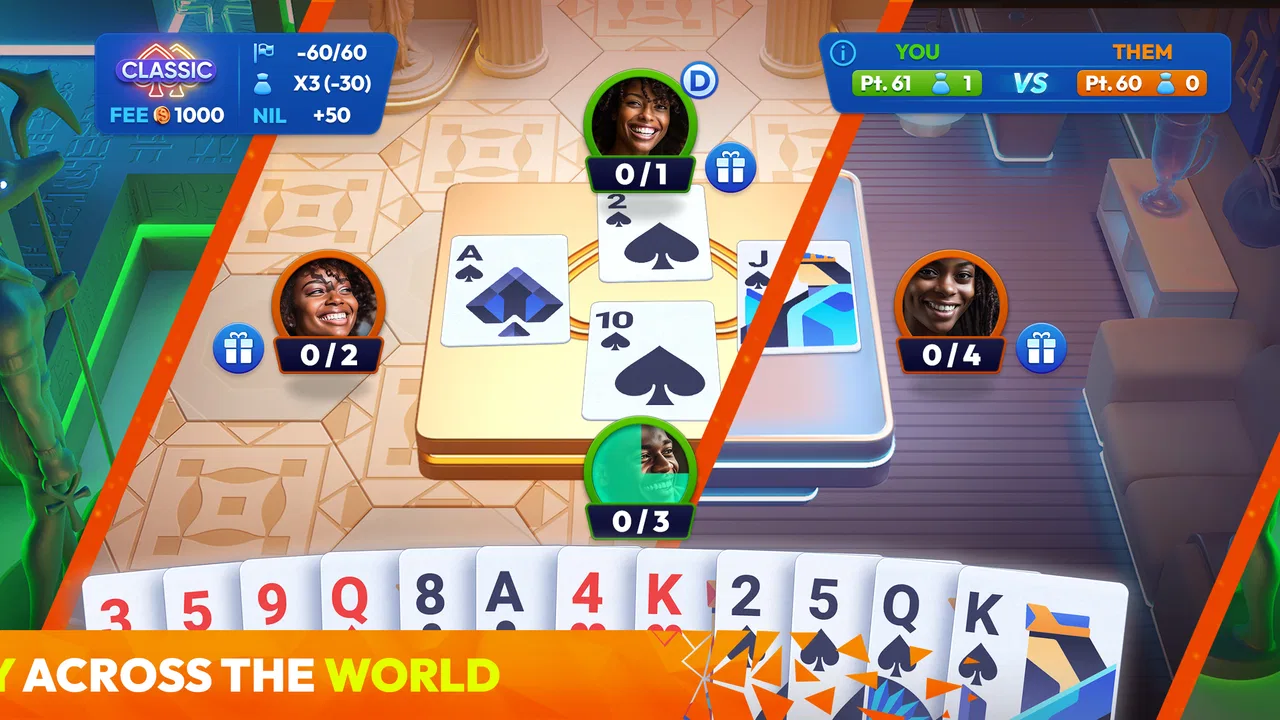
The basic layout is easier to understand than many busy mobile games. A spades table naturally gives the screen a clear purpose: identify the cards, follow the current trick, watch the bids, and decide what to play. That structure helps me stay oriented because the game is not asking me to learn a large collection of menus before I can begin. For someone who already knows spades, the mental effort goes into the hand rather than into discovering what each screen means.
You May Also Like

 Blood Strike: 2.5 Anniversary
Blood Strike’s Loadouts Turn Every Drop Into a Tactical Gamble
A close look at Blood Strike’s custom loadouts: how fast access to signature weapons reshapes its battle royale rhythm, rewards preparation, and narrows the gap between fights.

 Pandora - Music & Podcasts
Pandora’s Music Is Easy to Start, but Harder to Recover
Pandora’s strength is its low-effort path from a seed to a station. Its weak spot is how much confidence it asks you to place in connection, setup, and quiet recovery.

 8 Ball Pool
 Is Built on Rivalries, Rematches, and Routine
A close look at the rivalries, rematches, shared routines, and unanswered safety questions that turn a quick pool match into a persistent mobile community.

 Samsung Music
’s Quiet Strength Is Playing What You Already Own
Its reach comes less from spectacle than from dependable access to a personal library. That simplicity is both the app’s strongest retention engine and its ceiling.

 AccuWeather: Weather Radar
AccuWeather Review: A Quick, Clear Forecast for Everyday Decisions
For everyday plans, the best forecast is the one you can understand quickly. AccuWeather makes rain timing, radar, and local conditions easy to act on, with a few trade-offs.

 Hill Climb Racing
Why Hill Climb Racing Still Turns Crashes Into One More Run
A tiny car, a bumpy hill and one more upgrade: Hill Climb Racing keeps resurfacing because its simple chaos makes every near-miss feel personal.
More From Our News Desk



That familiarity can also help players who are new to online card games. The game belongs firmly to the card game category, so its central interaction is visual and sequential. I can focus on one decision at a time instead of scanning a complicated battlefield or tracking several timers at once. The most useful habit is to pause briefly at the start of each hand, identify my bid, and then check the cards already played before making a move. That simple routine reduces mistakes caused by rushing through a crowded table.
Navigation is most comfortable when I use the game in a quiet setting and keep my attention on the table. A smaller phone screen can make card ranks and suit symbols less comfortable to inspect, particularly when the device is held farther away or when the display is affected by glare. I would not call that a problem unique to this title, but it matters here because a single missed suit or rank can change the whole trick. Players with reduced visual acuity may find a larger phone or tablet more practical than a compact handset.
The game’s popularity suggests that it has found a broad audience: it has passed one million installs and holds an average rating of 4.6. I see those figures as useful context rather than proof that every player will find the interface comfortable. A high level of adoption tells me that the concept is accessible to many people, while individual comfort still depends on screen size, contrast, familiarity with spades, and tolerance for online interruptions.
One practical advantage of a card table is that the information is divided into repeated patterns. Once I learn where my hand, the played cards, and the current trick appear, I do not have to relearn the layout every round. That consistency is helpful for players who prefer predictable navigation. It also makes the game easier to explain to a friend: instead of describing a large system, I can point out the hand, the bid, and the trick currently in progress.
There is a trade-off, though. Online card games often combine the table with social or account-related elements, and those extra layers can pull attention away from the actual hand. I recommend entering a session with a clear goal: play a few rounds, practice bidding, or meet a friend. If I start tapping through every available option, the experience feels less focused. For players who are easily distracted, the best approach is to keep the session short and return to the table rather than treating the app as an endless feed.
Making decisions without unnecessary pressure
Spades is not a reflex game, but it is still possible to feel rushed. My most reliable method is to separate the decision into three checks: what I bid, what suits have already appeared, and whether my partner’s play changes the likely outcome. This is more than a strategy tip. It is also a way to make the game easier for anyone who needs extra processing time, because it turns a vague moment of pressure into a repeatable sequence.
New players should not judge themselves by their first few hands. Bidding is where much of the difficulty sits, and a poor bid can make the rest of a round feel confusing even when the card play is sensible. I would begin by making conservative bids, watching how many tricks I can realistically take, and only becoming more ambitious after I understand how the online table communicates the hand’s progress. That learning path is less frustrating than trying to imitate experienced players immediately.
The game is listed at version 2.44.5 and supports Android 7.0 or later. That relatively broad system requirement may make it practical for people who keep an older phone instead of upgrading frequently. At the same time, an older device can affect comfort through slower response, battery wear, or a smaller display. The operating-system requirement tells me whether installation is possible; it does not guarantee that every compatible device will feel equally smooth or readable.
Motor, sensory, and social considerations
From a motor perspective, a turn-based card game is generally less demanding than an action title. I am not steering a character, aiming quickly, or combining several gestures under a strict reaction window. The central action is selecting a card, which makes the game approachable for players who prefer low-intensity interaction. It is also suitable for short sessions where I want something interactive without committing to the physical precision demanded by many arcade or strategy games.
That does not mean every player will find the controls effortless. Small cards and closely placed controls can be awkward for people with limited dexterity, hand tremors, or difficulty making precise taps. I suggest holding the phone securely, using a stable surface when possible, and avoiding play while walking or riding in a vehicle. Those choices do not change the game itself, but they reduce accidental selections and make the experience more manageable.
The sensory side deserves equal attention. A card table is visually dependent: the rank and suit must be distinguished quickly, and the player needs to follow the order of play. Anyone with color-vision differences should rely on the card symbols and ranks rather than color alone whenever possible. I would also avoid playing in direct sunlight or in a dim room with strong reflections. A clean screen and a comfortable viewing angle can make a surprising difference during a long hand.
For players who are sensitive to sound, the safest habit is to control the phone’s media volume before entering a match. A card game does not need loud audio to be enjoyable, and I personally find it easier to concentrate when environmental noise is low. If someone prefers a completely quiet session, the game may be less suitable if its feedback or social atmosphere feels intrusive. I would test one brief round first rather than assuming that the presentation will suit every sensory preference.
Social play is one of the title’s main reasons to exist. The store summary presents it as an online multiplayer experience with friends, and that changes the accessibility question in an important way. A player who enjoys conversation, friendly competition, and shared routines may find the social layer motivating. Someone who prefers solitary play, avoids unknown opponents, or needs complete control over the pace may feel more comfortable with an offline card game instead.
Playing with a familiar friend can make the experience more inclusive than joining an unpredictable table. I can explain that I need a little more time, agree on a relaxed session, and avoid turning every hand into a contest. This is a concrete advantage of using the game socially: the people around the table can adapt their expectations even when the app itself cannot adjust every part of the experience to each player.
Another useful workflow is to use the game as a low-pressure way to stay connected with someone who lives elsewhere. Rather than arranging a long call, two friends can meet for a few hands and talk around the play. The cards provide structure when conversation slows, while the familiar rules keep the activity from becoming a demanding lesson. That makes the game a better fit for casual social contact than for players looking for a deep solo campaign.
Where it fits into everyday routines
I can imagine using it during a short break, after dinner, or while waiting for a friend who is running late. The important point is to choose a moment when an interrupted online round will not cause stress. A sudden appointment, weak connection, or low battery can make a multiplayer match inconvenient because other players are involved. For that reason, I would not start a serious session immediately before work, travel, or anything that requires my full attention.
It can also work for relatives with different levels of gaming experience. A person who has never played a modern mobile game may still understand the card table if they already know spades. I would first demonstrate the interface in a relaxed setting, explain bidding in plain language, and let them watch one hand before expecting them to play confidently. That approach is more welcoming than handing over the phone during a live match and asking them to learn while others wait.
For users who depend on a reliable connection, the online format is the main situational limitation. A card game may use less attention than a fast multiplayer title, but a connection problem can still interrupt the social flow. I would use a stable home network for planned sessions and treat mobile-data play as something for flexible, low-stakes rounds. People who regularly play in places with poor reception may prefer a traditional offline card app, even if it offers less social interaction.
The game is free to download, which lowers the barrier to testing it with a friend. Optional purchases range from $0.49 to $359.99 per item, so I would make spending boundaries clear before allowing children or anyone prone to impulse purchases to use the account. The Everyone rating makes the game broadly approachable by age, but an age label does not replace sensible device and payment supervision. In my view, the safest setup is to review purchase controls first and treat optional spending as separate from the basic value of the game.
Remaining barriers and the trade-offs behind the fun
The biggest barrier is not learning the rules; it is managing the conditions around an online match. A player may need a readable screen, a stable connection, enough time to finish a hand, and comfort with social interaction. When those four things line up, the game feels light and welcoming. When one is missing, the experience can become more tiring than expected, especially for someone who cannot easily recover from a missed turn or an accidental tap.
There is also a difference between accessibility of entry and accessibility of mastery. I can understand the table quickly, but becoming consistently good at bidding and partnership play takes practice. That is enjoyable for people who like gradual improvement, yet it may frustrate anyone seeking an immediately relaxing game with no strategic pressure. A simpler solitaire game is a better choice when I want full control, no waiting, and no concern about how my decisions affect another player.
Players who dislike in-app purchase environments should approach carefully. The free starting point is helpful, but the presence of optional items means the overall experience may invite spending depending on how a person uses the game. I would decide in advance whether I am playing only with the free experience, and I would avoid treating purchases as a shortcut to enjoyment. The game is strongest when the pleasure comes from reading the hand and sharing the match, not from chasing extras.
Another limitation is that spades itself is not equally familiar to everyone. Someone who knows other trick-taking games may adapt quickly, but a complete beginner can struggle with bids, partnerships, and the importance of keeping track of suits. I would recommend learning the basic rules away from a competitive table or playing alongside a patient friend. If the goal is a very gentle introduction to cards, a simpler matching or solitaire game may provide a smoother first step.
The developer, YallaPlay, has positioned this title around the classic online version of spades rather than around a large story or action system. That focus is a strength for people who want a recognizable activity without a complicated fictional world. It is a weakness for anyone who expects extensive solo content, character progression, or a visual spectacle. I would choose it for the table and the people at it, not for variety outside the card game.
One non-obvious advantage is that the repeated hand structure gives me a natural stopping point. I can finish a round, assess my attention, and decide whether to continue. That is healthier than beginning a game with no clear pause. The drawback is that an online match still creates a social obligation to remain available until the hand ends. If I am tired or likely to be interrupted, I would skip the session rather than leave halfway through.
A second useful insight is that the game can serve as a practice space for communication between partners. Watching how another player bids and responds teaches me more than memorizing isolated rules. I can discuss a confusing hand afterward and improve together. This works best with people I know; with strangers, differences in experience or expectations may make the same learning process feel uncomfortable.
A third trade-off concerns attention. Because the game is visually simpler than many mobile titles, it can be easier to concentrate on one task. Yet that simplicity also means there is little to distract from a mistake. If I misread a card, the consequence is visible immediately in the trick. I recommend slowing down before every play, especially when the hand contains several similar-looking cards or when the screen is not ideal.
Who should play and who should choose something else
I would recommend this game to adults and families who already enjoy spades, friends looking for a shared online routine, and casual players who want strategy without rapid action. It is also a reasonable option for people using older Android hardware, provided the screen remains comfortable and the device handles the current version well. The combination of a free entry point and familiar rules makes experimentation easy: invite one friend, play a few hands, and decide from there.
I would be more cautious about recommending it to someone who needs a fully offline experience, avoids social play, or has difficulty reading small visual details. It is also not my first choice for a player who wants a calm game with no time or partnership pressure. In those cases, solitaire, a physical deck with a patient companion, or an offline card application may offer better control over pace and presentation.
Parents should remember that an Everyone content rating describes broad content suitability, not every practical concern. I would still supervise spending, explain online etiquette, and make sure the child understands that other people may be waiting during a turn. For older players, I would focus on screen comfort, connection reliability, and whether the social format feels enjoyable rather than stressful. The same game can be welcoming in one household and inconvenient in another.
On iOS or Android, I would make the decision based less on the platform label and more on the device in hand. A larger, brighter screen may improve readability; a weak connection may undermine the multiplayer experience; and a device with limited battery life may not suit longer sessions. The game’s minimum Android requirement is 7.0, so Android users should check compatibility before installing. Beyond that, personal comfort is the more important test.
After spending time with it, my view is that Spades Masters - Card Game succeeds when it stays close to what players want from spades: a clear hand, meaningful choices, and a reason to sit down with another person. It does not need action mechanics to be engaging, because bidding and partnership decisions create enough tension on their own. I appreciate that the free price makes the first step simple, while the broad age rating keeps the concept approachable.
My final recommendation is conditional but positive. Try it if you want online card sessions with friends and can comfortably read a mobile table, manage occasional multiplayer pressure, and keep optional spending under control. Begin with short matches, use a stable connection, and give yourself time to learn bidding rather than judging the game after one awkward hand. If your priority is silence, complete control, offline reliability, or highly adjustable presentation, another card game will probably serve you better. For the right player, though, this is a friendly way to turn a familiar deck into a shared break.
FAQs for Spades Masters - Card Game
01What is Spades Masters - Card Game and how does it work?
Spades Masters - Card Game is a digital version of the classic card game, Spades. It allows players to compete against AI or real players in multiplayer mode. The objective is to accurately bid the number of tricks you expect to win in each round. The game includes various levels and challenges to enhance your strategic skills.
02Is Spades Masters available for both Android and iOS devices?
Yes, Spades Masters - Card Game is available for download on both Android and iOS platforms. You can find it on the Google Play Store for Android devices and the Apple App Store for iOS devices. Ensure your device meets the minimum system requirements for optimal performance.
03Does Spades Masters - Card Game require an internet connection to play?
Spades Masters can be played both online and offline. While you can enjoy single-player mode without an internet connection, multiplayer and online tournaments require a stable connection to ensure a smooth gaming experience. This flexibility allows you to play anytime, anywhere.
04Are there in-app purchases in Spades Masters - Card Game?
Yes, Spades Masters offers in-app purchases to enhance your gaming experience. You can buy additional features, such as special cards, new avatars, or premium memberships. While these purchases can enhance gameplay, they are optional and the game can be enjoyed without spending money.
05How does the multiplayer feature work in Spades Masters?
The multiplayer feature in Spades Masters allows you to compete against other players worldwide. You can join existing games or create your own, inviting friends or playing against random opponents. The game includes leaderboards and rankings, adding a competitive edge to your gaming experience.
Pros
- Engaging gameplay with strategic depth.
- Smooth graphics and intuitive interface.
- Multiplayer mode enhances social fun.
- Regular updates with new features.
- Comprehensive tutorials for beginners.
Cons
- In-app purchases can be pricey.
- Occasional ads disrupt gameplay.
- Requires constant internet connection.
- Limited customization options.
- High battery usage during long sessions.

Spades Masters - Card Game
Gallery